
Tadej Pogačar won the 2026 edition Milan-San Remo, and in doing so claimed his fourth out of five monuments. Having crashed with 32km to go, Pogačar quickly remounted and rejoined the bunch before attacking on the Poggio, escaping with Tom Pidcock (Pinarello Q36.5), and holding off the chasers all the way to the finish on the Via Roma. In the women's race, former world champion Lotte Kopecky won the sprint from a small group to claim her first MSR title - the race came back onto the women's calendar in 2025 following a 20 year absence.
Milan-San Remo is the first of cycling's five Monuments, and one of the most prestigious races of the season. It's also the longest, typically just shy of 300km for the men and 156km for the women.
Throughout it's history, Milan-San Remo has been won by a variety of riders, from a punchy climber like Paolo Bettini, to bunch sprinters like Mark Cavendish, Jasper Philipsen and Erik Zabel. It's also been won by great descenders. Sean Kelly's win in 1992 was perhaps the most famous, while Vincenzo Nibali (2018) and Matej Mohorič (2022) took advantage of the tight, twisty descent off the Poggio to put time into their rivals. Mohoric famously used a dropper seatpost to gain an advantage when he won..
A women's version was reintroduced last year after a 20-year hiatus, and renamed the from the Primavera Rosa to Milan-San Remo Donne. Lorena Wiebes became the first winner in its modern form. As with last year, both men's and women's races will be held on the same day in 2026.
Like the other Monuments Milan-San Remo has plenty of nicknames: 'La Classicissima', 'La Primavera' due to its springtime slot, and it's also known as one of the 'sprinters' Classics' (the other being Paris-Tours) because of its flat, fast finish on San Remo's Via Roma.
It was inaugurated in 1907, when it was won by Frenchman Lucien Petit-Breton. Since then it has been won by many of cycling's biggest stars, Eddy Merckx being the most prolific with seven wins between 1966 and 1976.
Milan-San Remo 2026: Key details
Date |
21 March 2026 |
Distance |
298km |
Start location |
Pavia |
Finish location |
San Remo, Italy |
UCI ranking |
WorldTour |
Edition |
117th |
Last winner |
Mathieu van der Poel (Ned) |
TV coverage (UK) |
TNT Sports |
TV coverage (US) |
TBC |

Tadej Pogačar attacks on the Poggio
Milan-San Remo 2026: The route

The Milan-San Remo route 2026
Milan-San Remo 2026 was be the second of three editions to start in Pavia, thanks to a three-year deal between race organiser RCS and Pavia province. As they have done every year since the race began in Milan in 2022 again the early kilometres have changed slightly. Heading south from Pavia the route jinks east and then west, joining last year's route at Voghera 60 kilometres in. Finally, it links up with the historic route at Tortona after 80km.
There's a gradual climb up to the Passo del Turchino at around the halfway mark before a quick descent, while the twin climbs of the Cipressa (max 9%) and the Poggio (max 8%) which are now the hallmarks of this race appear in their usual position inside the final 30km.
After the Poggio it's time for the classic switchback descent into the urban centre of San Remo, with the finish line on the Via Roma, where the riders get a well-earned rest after 289km of hard racing.
Milan-San Remo: Past winners
2026: Tadej Pogačar (Slo) UAE Team Emirates-XRG
2025: Mathieu van der Poel (Ned) Alpecin-Deceuninck
2024: Jasper Philipsen (Bel) Alpecin-Deceuninck
2023: Mathieu van der Poel (Ned) Alpecin-Deceuninck
2022: Matej Mohorič (Slo) Bahrain Victorious
2021: Jasper Stuyven (Bel) Trek-Segafredo
2020: Wout van Aert (Bel) Jumbo-Visma
2019: Julian Alaphillipe (Fra) Deceuninck–Quick-Step
2018: Vincenzo Nibali (Ita) Bahrain-Merida
2017: Michal Kwiatkowski (Pol) Team Sky
2016: Arnaud Démare (Fra) FDJ
2015: John Degenkolb (Ger) Giant-Alpecin
2014: Alexander Kristoff (Nor) Katusha
2013: Gerald Ciolek (Ger) MTN-Qhubeka
2012: Simon Gerrans (Aus) GreenEdge
2011: Matt Goss (Aus) HTC-Highroad
2010: Oscar Freire (Spa) Rabobank
2009: Mark Cavendish (GBr) Columbia-Highroad
2008: Fabian Cancellara (Sui) CSC
Milan San Remo Donne: Previous winners
2026: Lotte Kopecky (Bel) SD Worx Protime
2025: Lorena Wiebes (Ned) SD Worx Protime

-
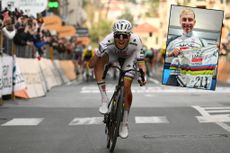 Tadej Pogačar's Milan-San Remo jersey fetches €95,100 at auction
The storied jersey is battered by his crash and signed by his team-mates
3 Comments -
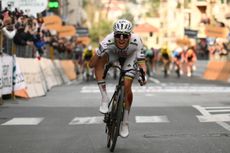 Tadej Pogačar won Milan-San Remo on a cracked frame with a rubbing disc brake
The damage was incurred in a crash that the Slovenian initially thought had ended his race. No chance!
3 Comments -
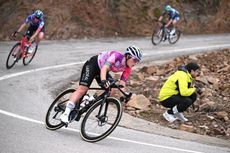 'Five ribs and a micro-fracture... it definitely could have been worse' – Italian rider recovers from guardrail plunge in Milan-San Remo Donne
Debora Silvestri was propelled several metres over a guardrail in the one-day race
-
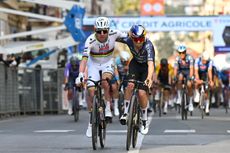 'The better years are ahead of him' – Tom Pidcock hints at glory to come at Milan-San Remo
Pidcock's coach says Monument runner-up will only keep improving
13 Comments -
 'I thought it was all over' – Tadej Pogačar outsprints Tom Pidcock to win Milan-San Remo after late crash
The World Champion claims elusive victory after crashing before the Cipressa
4 Comments -
 How to watch Milan-San Remo 2026: Everything you need to live stream the first Monument of the season
All the key information on broadcasters and live streams for Milan-San Remo on March 21, the first Monument of the cycling season.
-
 Milan-San Remo 2026 start list: All the riders to look out for in the first Monument of the year
It is being billed as a Pogačar vs Van der Poel smackdown, but there are many others waiting in the wings
-
 Matthew Brennan ruled out of Milan-San Remo with illness
Visma-Lease a Bike expected to ride for Wout van Aert at first Monument of the season
-
 'Everybody's looking at me' – Tadej Pogačar on his dates with destiny at Milan-San Remo and Paris-Roubaix
The world champion could become the first rider in almost 50 years to win all five Monuments – but how much does it matter to him? Tom Davidson meets him to find out
-
 What is the UCI's Extreme Weather Protocol?
We take a look at what it is, when it's needed, and the extra High Temperature Protocol
-
 'I’m still one of the best bike riders in the world and there will be moments where I can show it' – Wout van Aert aims for Monument glory despite ankle setback
Belgian will ride Classics, Tour de France and Vuelta a España in 2026
2 Comments -
 'When you think cycling might be getting predictable, the most dramatic things can happen' – the Cycling Weekly team's races of the year
Let's just hope for just as many thrills in 2026...
-
 'We are seeing the best cyclist ever' – can Mathieu van der Poel be the one to upset Tadej Pogačar's plans for 2026?
As Tadej Pogačar attempts to add Milan-San Remo and Paris-Roubaix to his palmarès, is there anyone who can stop him?
2 Comments -
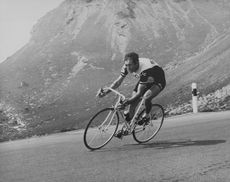 'Nomadic dreamer': former Milan-San Remo winner passes away aged 83
A self-proclaimed 'bit of a rascal', Michele Dancelli raced through the Merckx era and still managed to win big on occasions
3 Comments -
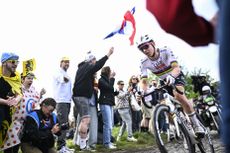 'I'm not a superhero, I'm just a normal guy': Tadej Pogačar insists he's a regular person who simply wants to win Paris-Roubaix
Roubaix and Milan-San Remo major targets for 2026, says the Slovenian, who says he isn't about to run out of motivation any time soon
2 Comments -
 How to watch Milan-San Remo 2025: Everything you need to live stream the first Monument of the season
All the key information on broadcasters and live streams for Milan-San Remo on March 22, the first Monument of the cycling season.
-
 Tadej Pogačar's quest for glory, San Remo Women is here, and will a sprinter win? Everything you need to know about Milan-San Remo
Milan-San Remo and San Remo Women kick off the Monuments on Saturday, here's how to watch, who to watch, and what to watch out for
-
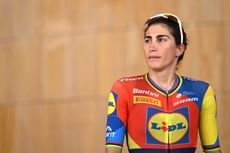 'Winning is a dream' - Suspense builds for return of women's Milan-San Remo after 20 years
Race's comeback marks a new milestone, say riders
-
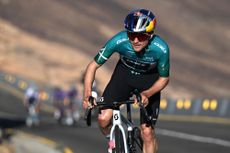 No Paris-Roubaix or Tour of Flanders for Tom Pidcock as he confirms spring calendar
AlUla Tour winner set to ride Strade Bianche and Milan-San Remo for Q36.5
-
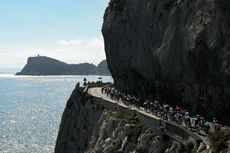 Women's Milan-San Remo confirmed for 2025, route and distance unknown
UCI announces addition to Women's WorldTour calendar, meaning four of the five men's Monuments now have women's equivalents
-
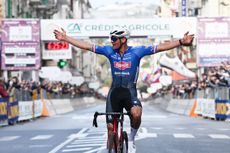 Mathieu van der Poel not intimidated by Tadej Pogačar’s form ahead of Milan-San Remo clash
Dutchman starts his 2024 road season at Italian Monument on Saturday
-
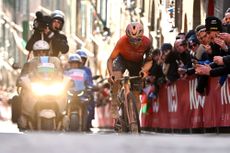 Tom Pidcock 'wouldn’t be surprised' to see attacks before the Poggio at Milan-San Remo
British rider will lead the line for Ineos Grenadiers alongside Filippo Ganna
-
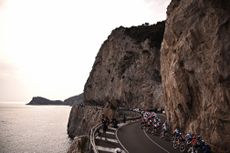 Do longer races actually mean better bike racing?
Milan-San Remo is shorter than 300km this year - shock! - but other races are getting longer. Is that actually a good thing?
-
 'This was the day that I realised I'm quite good at racing' - Matej Mohorič remembers the ride that changed him
A stage winner in all three Grand Tours, as well as Milan-San Remo, Mohorič reflects back on his 2012 Junior World Championships victory
-
 Analysis: How Mathieu van der Poel won Milan-San Remo
After another exhilarating finish to Milan-San Remo, it’s time to look back at the day and the key tactical moments that defined it
-
 'No regrets' for Tadej Pogačar after falling short of Milan-San Remo podium
UAE Team Emirates rider says the best man won on the Via Roma
-
 CW Live: Mathieu van der Poel conquers Milan-San Remo; Bianchi hits back at handlebar criticism; Cyclists' union elects new president; Wout van Aert runs single chainring; Dropper seatpost spotted on Matej Mohorič's bike
Join us for the latest news in the world of cycling, including live updates from Italy
-
 Mathieu van der Poel powers to Milan-San Remo victory with explosive Poggio attack
'This was my best level,' says Dutchman after Monument win
-
 Matej Mohorič not fazed by being marked on Milan-San Remo return
Slovenian says ‘nothing will change’ as he looks to outfox rivals on the Poggio


