



I ditched the manual pump to put 12 of the best electric bike pumps in 2026 head-to-head
The secret is out; the days of manual pumping are numbered. I have tested and rated a dozen of the best portable electric bike pumps


The secret is out! The best electric bike pumps are here to stay. Over the last year or so, I've witnessed not just a revolution, but a complete shift in how we pump up our tyres. What were once clunky, awkward devices have been transformed into sleek, compact designs that easily slip into a jersey pocket.
Given how divisive the topic of electronics is among cyclists, their widespread adoption has been met with resounding acceptance. The fascinating part is that this is just the first wave of this game-changing technology, yet they have managed to eliminate the need for the best bike mini pumps.
Fear not; it is unlikely they will ever replace the trusty and best floor pumps, especially for installing tubeless tyres.
Given the pace at which the category is evolving, to date, the team and I have tested well over two dozen portable electric bike pumps, with plenty more to come. In the meantime, the top honours go to the Cycplus AS2 Pro for its speed, precision, and programmability.
The best electric bike pumps 2026, as tested by Cycling Weekly
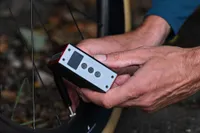
As of our latest update, we stand by the ratings we previously assigned, but given how quickly electric pumps are being released and evolving, we are continuously testing to see whether any can take the top spot from the Cycplus. Currently on test: Cycplus AS2 Ultra, Topeak E-Booster Mini and Prestaflator Go! Most recently tested was the Silca Elettrico Ultimate by CW contributor Tim Russon.
Best Overall

The AS2 Pro is one of two pumps from Cycplus to make our top-rated list—but when a brand delivers this well at both ends of the scale, it only feels fair to give each one its own spotlight. The AS2 Pro builds on the solid foundation of the standard AS2, adding brains to the brawn without straying too far from its compact and practical roots, which ultimately earns it the crown of best overall.
At a glance, the AS2 Pro looks nearly identical to its sibling - aside from being taller, you’d be hard-pressed to spot the difference. It comes with the same thoughtful extras: a flexible hose, a spare valve seal, a Schrader adapter, and a ball inflator pin.
Where the Pro steps up is in functionality. It features a small digital screen and programmable pressure settings, which gives it a slicker user experience. Simply set your desired PSI and let it do the work. However, the screen and buttons are on the back side of the unit. That layout isn’t the most ergonomic and means you often operate it blind.
The buttons are smaller than those on the regular AS2, which seems like a step backwards - especially when you're fumbling with gloves or cold hands. But performance-wise, the AS2 Pro is the strongest of the two, inflating a 30c tyre to 50 psi in just 37 seconds, making it the fastest unit on test. And with its 420mAh battery, it managed four full inflations - just one shy of the much larger Topeak.
Best budget

The Airbank might not have the name recognition of some of its rivals, but it certainly deserves your attention. Quietly undercutting the competition on price, this is the most affordable pump in the test - yet on paper, it keeps pace in almost every area. It’s also the lightest on test, at just 93 grams!
It packs comparable battery capacity and a maximum pressure rating to the others, and promises a full recharge in under 30 minutes - half the time of some. This might not seem important; however, it means that in a pinch, you can get it charged up just enough to ride without waiting around or cancelling plans.
Now, yes, that lower price does come with a few compromises. There’s no silicone sleeve, and no zipped carry pouch either. You do get a spare valve seal and a Schrader adapter, though, so the essentials are provided.
The Airbank’s ergonomics are spot on. The softened edges and lightweight construction make it the most comfortable to handle. The large button is well placed, and activation is easy, even with gloves on. That said, the LED indicator is just a small pinhole LED inside the button, so visibility isn’t great.
Performance-wise, the Airbank is no slouch. It inflated a 30c tyre to 50psi in just over 50 seconds, making it one of the fastest. It also successfully seated a tubeless tyre without hesitation. That’s genuinely impressive from a pump this compact, this cheap, and this light.
Best nano pump

The Cycplus AS2 is quietly impressive with a few thoughtful touches that make it a strong contender in this test. Straight out of the box, there are more accessories than most - namely, a flexible hose, a spare valve seal, and even a Schrader adapter pin. That’s already one up on the Muc-Off in terms of value, especially when you factor in long-term usability.
It also arrives in a silicone case. While it doesn’t have quite the same polished look as the AirMach’s, it’s just as functional, offering good grip and protection. The pump’s nozzle is smaller, too, which means the form factor is more compact in a jersey pocket. The trade-off here is that swapping valve types or replacing the seal is a little fiddlier.
Performance-wise, it operates almost identically to the AirMach: one press to wake, double press to inflate. One small gripe is that the button is located on the underside and is completely covered by the case. It works fine, but trying to find it without looking (especially with gloves) is a bit of a faff. A simple cut-out or embossing would go a long way here.
In the field, the AS2 reached 50 psi in 60 seconds and seated a tubeless tyre just as well as its competitors. A bonus point is that it runs quieter and with noticeably less vibration than the competition.
Best for multiple inflations

The Topeak E-Booster Digital is noticeably larger than its closest rivals, and while that pushes the bounds of what you’d realistically want to carry in a jersey pocket, there’s a clear payoff. Inside that bigger shell sits a generous 600mAh battery - comfortably the biggest of the bunch. For anyone planning multiple inflations or longer trips, that added capacity could be worth considering - think gravel riding and bikepacking.
A feature that stood out on the E-booster was the sliding toggle offering dual Presta and Schrader compatibility without changing parts. It’s simple, effective, and very user-friendly. The digital screen is large and clear, and the illuminated buttons are easy to press even with gloves on. The interface is intuitive, too, making it super easy to use.
A couple of minor niggles did crop up; the screen and controls are positioned on the opposite side to the nozzle, which can make things fiddly when you're crouched down. I accidentally press a button mid-inflation, which causes it to shut off, and it’s a little too easy to cover the air intake port with your hand - but these are far from deal-breakers. Performance-wise, it hit 50psi in exactly 60 seconds and barely made a dent in the battery.
Best ergonomics

Muc-Off is arguably the most recognisable name here, which meant I had reasonably high expectations for the brand’s first foray into the electric pump space. I’m pleased to report that the AirMach delivers where it counts.
First impressions were strong. The silicone outer sleeve not only gives the AirMach a premium feel in the hand, but the textured pattern adds a useful amount of grip. This design feels well considered.
The valve head itself is nicely machined, with metal knurling that makes switching between Presta and Schrader easy. That said, the actual valve seal is made from quite a soft rubber. It worked perfectly in testing, but you get the impression it may wear out quickly. There are no spares in the box either - Muc-Off does say that replacements are easy to come by.
As with most pumps in this test, the USB-C charging port doubles as the air intake, and the button layout is intuitive. Performance-wise, it took around 60 seconds to inflate a 30c tyre from flat to 50psi. More impressively, it managed to seat a tubeless tyre without breaking a sweat.
Best for high pressures

The Fumpa Nano is perhaps the most visually distinct and most feature-rich pumpon test. With its curved chassis and anodised aluminium finish, it has more in common with a high-end gadget than a bike pump. Beyond this sleek appearance lies some serious performance.
In use, the Nano feels great in the hand. The curved edge sits naturally against the palm, and the raised button is easy to find, even in low light. Operation differs slightly from the others - rather than tapping a sequence, you simply press and hold to start, then press again to stop. It’s intuitive and worked without a hitch in testing.
The raw aluminium looks sharp but offers noticeably less grip, especially with gloves or wet fingers. It also conducts heat and vibration more than the others, something I noticed when the pump had been running at full pelt for 60 seconds.
That said, it’s fast. The Fumpa Nano inflated a 30c tyre to 50 psi in just under a minute and seated a tubeless tyre with no fuss. It’s clearly got more grunt than most, and it shows.
Specification Overview
Pump |
Pump type |
Weight |
Display |
Programmable |
Max Pressure |
Cycplus AS2 |
Nano |
97g/3.4oz |
No |
No |
100psi/6.8 bar |
AIRBANK Mini Pocket SE |
Nano |
93g/3.3oz |
No |
No |
100psi/6.8 bar |
Muc Off Airmach |
Nano |
97g/3.4oz |
No |
No |
100psi/6.8 bar |
Fumpa Nano |
Nano |
100g/3.5oz |
No |
No |
120psi/8.2 bar |
Flextail Tiny |
Nano |
130g/4.5oz |
Yes |
Yes |
120psi/8.2 bar |
Cycplus AS2 Pro |
Mini |
120g/4.23oz |
Yes |
Yes |
120psi/8.2 bar |
Topeak E-Booster Digital |
Mini |
162g/5.7oz |
Yes |
Yes |
120psi/8.2 bar |
ROCKBROS Mini AS1 Pro |
Mini |
124g/4.3oz |
Yes |
Yes |
120psi/8.2 bar |
Fumpa Mini |
Mini |
190g/6.7oz |
No |
No |
120psi/8.2 bar |
Fumpa OG |
Off-Bike |
360g/12.7oz |
Yes |
Yes |
120psi/8.2 bar |
Cycplus AS2 Pro MAX |
Off-Bike |
205g/7.2oz |
Yes |
Yes |
120psi/8.2 bar |
Bosch EasyPump Cordless |
Off-Bike |
430g/15.1oz |
Yes |
Yes |
150psi/ 10.3 bar |
Silca Elettrico Ultimate |
Off-Bike |
239g/8.4oz |
Yes |
Yes |
100psi/6.8 bar |
Testing Results
Our testing of the best electric bike pumps was twofold. Our primary test involved a simple timed inflation assessment: how quickly can a pump inflate a 700 x 30mm tyre to 50 PSI? We also began testing whether the pumps could seat one of the best tubeless road bike tyres; however, all six of the smallest 'Nano' pumps achieved this, which is fantastic news. This meant I didn't need to test the more powerful units.
Pump |
Time to 50 PSI (secs) |
Claimed no. of inflations |
Cycplus AS2 |
60 |
2 |
AIRBANK Mini Pocket SE |
50 |
2-3 |
Muc Off Airmach |
60 |
2 |
Fumpa Nano |
60 |
1-2 |
Flextail TIny |
60 |
1-2 |
Cycplus AS2 Pro |
37 |
2-3 |
Topeak E-Booster Digital |
60 |
5 |
ROCKBROS Mini AS1 Pro |
36 |
4-5 |
Fumpa Mini |
30 |
2-3 |
Fumpa OG |
18 |
6 |
Cycplus AS2 Pro MAX |
15 |
4 |
Bosch EasyPump Cordless |
60 |
6 |
Silca Elettrico Ultimate |
22 |
13 (tested) |
Most recently tested
Also tested
Flextail Tiny Bike Pump - While the Flextail packs a slightly bigger battery than the other pumps in the 'Nano' category, it felt like it was simply trying to do too much with things like its on-bike mount and emergency light feature.
RockBros AS1 Pro Mini - One of the few devices to feature a button on the side of the unit, which was a significant advantage for me, as it inflated my tyre to 50 psi incredibly quickly in just 36 seconds. The trade-off for the large battery and rapid inflation is that the AS1 gets really hot.
Fumpa OG - Since this is a pump that won’t be joining you on rides, I wasn't too concerned about its size and weight. What’s truly impressive about this pump is how quickly it inflates. It filled my 30c tyre to 50psi in just 18 seconds. It was an outstanding performance that it achieved with ease.
Cycplus AS2 Pro MAX - It follows the same formula as the two smaller models and performs just as well. It isn’t quite as quick to inflate as the Fumpa, taking 30 seconds to reach 50psi; however, it still demonstrates good performance.
Bosch EasyPump Cordless - It’s the only pump which breaks away from the incredibly similar design language of all the other models on test. However, it is heavily geared towards Schrader inflation, I imagine, for car users rather than bicycle users.
Fumpa Mini - The Fumpa Mini is a big brother to the Nano, and the size difference is noticeable, with every dimension getting considerably bigger. Despite having the smallest battery, it’s the heaviest in the category.
How we tested the best electric bike pumps
With over 100 years of cycling expertise and testing under our belts, Cycling Weekly carries a vast amount of experience into every review we do. We have a dedicated team whose job is to review a wide range of cycling products and write objective reviews based on their experiences with them in various conditions.
When evaluating the best electric bike pumps, we considered user-friendliness, inflation speed, battery life, portability, and overall value. The vast majority of this testing took place in the workshop, allowing us to maintain replicable conditions and providing easy access to power and a stopwatch. However, throughout the testing, we were fortunate—or perhaps unfortunate—to experience punctures out on the road that required inflation, enabling us to test in real-world conditions.
To put the portable electric bike pumps to the test, I devised two simple tasks that would accurately replicate the two most common real-world situations. The first was a simple timed test, where I imagined it was a cold, wet day with cars rushing past. How quickly can the pumps achieve 50 PSI? Why 50 PSI? With road tyres getting wider and the norm being around 30mm, 50 PSI is roughly where most tubeless users will be and represent the lower end of a tubed setup. I set the benchmark at 60 seconds; this made sense as, in a couple of minutes, one could use a manual bicycle pump. I felt that the electric ones not only need to take the effort out of it, but also be speedier.
The second is the more difficult of the two tests, which was to seat and inflate a tubeless tyre. However, I only performed this test on the 'Nano' pumps, and as all of them achieved it, the assumption was that the more powerful pumps would as well. The couple I checked certainly did.

Meet our tester

Before Sam joined the CW team and became the face of your YouTube channel, he spent 5 years gaining hands-on experience at his local bike shop. Sam is a big fan of new and interesting cycling tech and loves to chat about it in his monthly 'Tech of the Month' show with CW Tech Writer Joe Baker. Sam has now moved to pastures new, working on his own channel; however, his testing in the category remains highly relevant given just how many pumps he tested at one time, enabling him to really compare and contrast.
How to choose the best electric bike pump for you
You can break down the best electric bike pumps into three categories - nano, mini and off-bike. That’s because, as I received all of these different pumps for testing, I started to notice a clear divide between them and the specifications they offer.
However, some things were universal across all of them: they’re all USB-C rechargeable, which is a win for those with a newish smartphone, as it's just one cable. All the pumps cater to both Presta and Schrader valves (some more successfully than others), and they all come with a sealable travel bag to keep the pump free of dirt and water—a critical factor in ensuring your pump works for years to come.
Ultimately, with testing complete and with all the pumps here achieving at least one tyre inflation or tubeless seating, the best electric bike pump for you really boils down to three factors:
- How much weight are you willing to carry in your pocket?
- What is the size of your tyres, and how many inflations would you like to be able to do out on the road?
- How good are you at remembering to keep things charged and ready?

'Nano' Pumps
All pumps in the nano category, except one, feature a 300 milliamp-hour sized battery, which means a quick charge time of 30 minutes or less and are under 110g/3.8oz. They all claim to reach a maximum of 100 psi, making them ideal for road use, especially for those on short rides, where it might be just a get-home situation, running a tubeless setup, and the likelihood of a puncture is low, or for those looking to keep their gear to a minimum.

'Mini' Pumps
The distinct difference between the nano’s and the mini’s can be boiled down to three things, which are intertwined. These pumps all have generally larger form factors, with heavier weights ranging from 120g/4.2oz to 190g/6.7oz. This is essentially a result of the bigger 400 to 600 mAh batteries.
As a result of this extra power and size, brands have started to introduce LCD displays and additional buttons that predominantly allow you to pre-set or program a desired pressure, which will automatically cut the pump when reached.
These larger, more powerful pumps are ideal for those concerned about multiple punctures on a ride or always riding with that mate who never carries a pump. The extra puff also makes it the best suited for inflating the best gravel bike tyres and use on multi-day or extended rides where charging opportunities are few and far between.

'Off-bike/workshop' Pumps
Last but certainly not least, we have the off-bike category. Essentially, these are pumps that are better suited for staying at home, in the workshop, in the garage, or in the car. They feature much larger batteries and are ultimately a bit more powerful and faster inflating.
While it matters much less, these pumps are generally between 200g/7oz and 400g/14.1oz. For those who always have one of the best handlebar bags on their bike, it is not impossible to carry one of these around, but only if you're using large gravel tyres of 50c and above, or MTB tyres. However, you certainly want somewhere on the bike to carry them.
Frequently asked questions about electric bike pumps
How do you use an electric bike pump?
All the pumps in this test operate slightly differently: some require a single button press to turn on and then another to start inflation; others are press and hold, while some need a single press to wake and begin pumping. It largely depends on the manufacturer. However, aside from the programmable units, I would say they are all fairly straightforward to use. The buttons aren’t always positioned ideally, but generally speaking, it’s just a single button—you push it directly onto the valve and hold it while it inflates.
Which is better, hand pump or electric pump?
I don't believe these electric pumps will eliminate the good old-fashioned best bike mini pumps, as both have their pros and cons. Hand pumps are generally very reliable these days and are unlikely to let you down; they can be stored on your bike at all times and require zero maintenance or charging. However, on a cold and wet day, being stuck by the side of the road pumping away can be tough on morale.
The clear advantage of electric bike pumps is their speed and low user input; however, it is another thing to keep them charged and ready to ride. While many of the pumps offer fast charging for those like myself who struggle to remember, it will likely become a blocker to riding or a burden to carry one of the larger, battered options around.
Whats the best electric pump for home use and can it replace my track pump?
They absolutely could replace track pumps in the not-too-distant future for many of us. As I found in my testing, even the 'nano' or smallest pumps could inflate and seat a tubeless road tyre; most could do so only once before needing a recharge. However, the much larger units, like the Topeak E-Booster, would have no problems doing this a few times, even on larger-volume tyres.
I guess the question is, do you want it to replace your track pump?
Personally, I still enjoy the simplicity of a manual pump; I can control the input of air much more accurately, and they're handy for prams, cars and wheelbarrows. Sure, an electric pump can do those too, although some might not work so well on a car tyre.
I also think there is still an awkward middle ground: one thats good for home, workshop, or general use might still be a bit bulky to carry in your pocket, which means considering two pumps. In the same way, we now have Track and Hand pumps. As I said, this tech is moving fast, and we probably aren't far away from replacing manual pumps totally. Pumps like our best overall, the Cyclplus AS2 Pro, are already pretty close.
How long do they take to charge?
It's worth noting that while many of the pumps we tested feature a quick charging function, not all do. This means that in some cases, you could be waiting around for a couple of hours to get enough juice into one for a single inflation. However, those that do feature a quick charge or top-up function can provide enough charge for a single inflation in around 20 to 30 minutes.
Can I use them on my Car?
Certainly, the 'mini' and 'Off-bike' versions are ideally suited for use with car tyres; however, you may find that it takes a while due to the volume of air in a car tyre compared to a bike tyre. Keep an eye on the pump, as it may become a bit hot.
While the 'Nano' pumps, like all the pumps we tested, feature both Schrader and Presta valve compatibility, due to their size, it's likely they may struggle to pump a car tyre.
Are they all USB-C?
As of 2024, all electrical devices sold in the EU are required to be USB-C, which has driven a global shift to the standard. Given that the majority of electric bike pumps, at least those we have seen, were launched after this law change, and therefore most are USB-C. Of the 13 we have tested, all have been USB-C.
